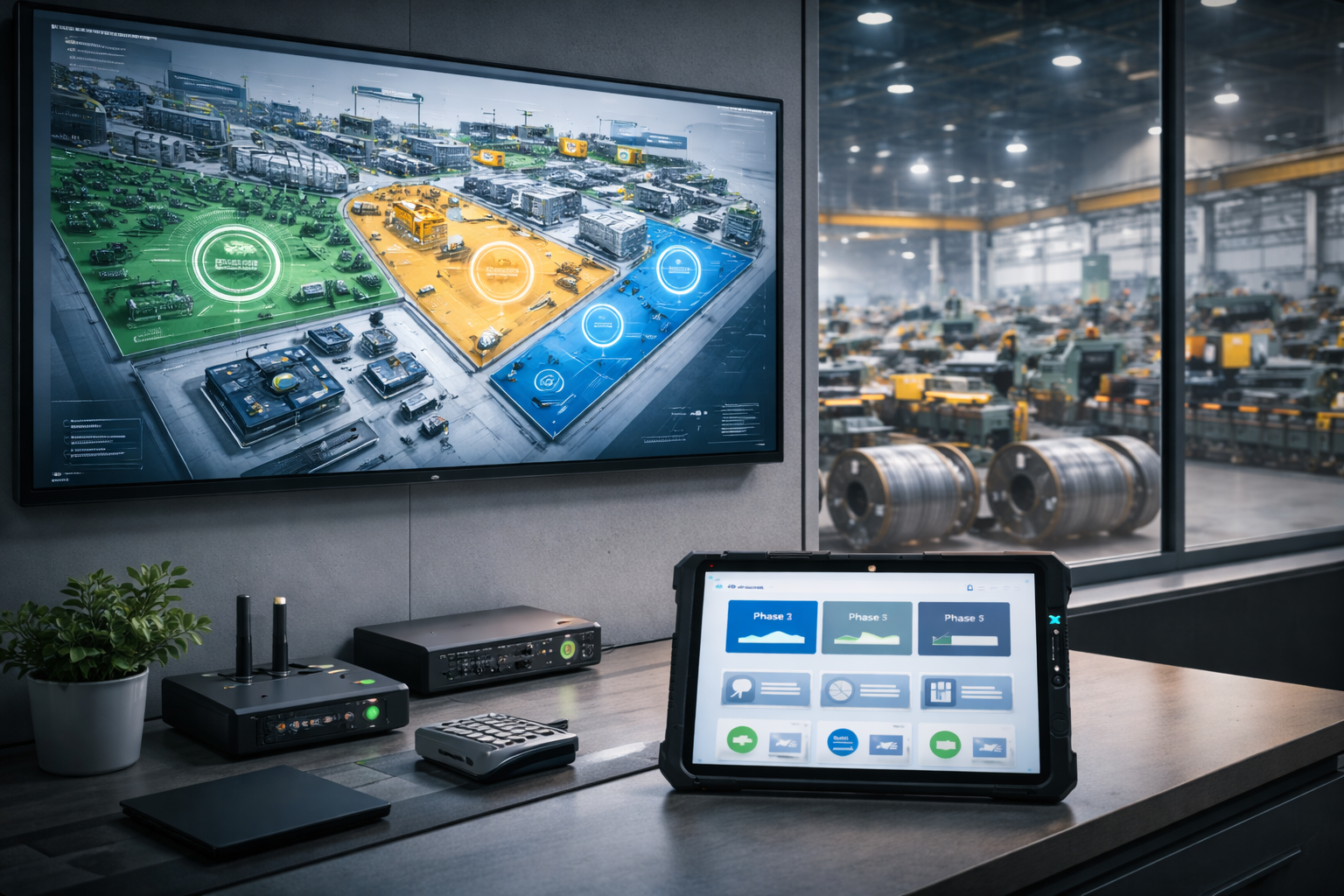
Digital transformation in a steel plant is very different from a simple office software upgrade. Your lines cannot stop for experiments. Heats are booked, coils are moving, cranes are running and customers are waiting. Any change that slows the shop floor is quickly rejected, even if the long term idea is good.
The real challenge is not about choosing tools. It is about digitizing without disrupting daily production.
This article gives a practical, phased strategy for digitizing steel rod, wire, strand, LRPC, wire rope and sling plants while production continues. It is written for operations, planning, quality and plant heads who want to move forward without creating chaos.
For more steel focused ERP and digital ideas, you can explore SteelExperts.in.
Why Digitization Feels Risky in Steel Plants
Steel plants work under constant pressure:
- Committed delivery schedules
- High energy and conversion costs
- Complex WIP spread across multiple bays and yards
- Safety and quality expectations from customers and regulators
When people hear the word “digital transformation” they often imagine:
- Big bang ERP go live dates
- New screens for every operator on day one
- Unfamiliar workflows that slow down dispatch
- Consultants who do not fully understand the shop floor reality
So resistance is natural. The path forward is a phased, shop floor friendly digitization approach that respects production priorities.
A steel specific ERP like SteelExperts is built with this reality in mind. To see how modules map to real plant flows, you can review SteelExperts ERP Modules.
Principles for Non Disruptive Digital Transformation
1. Respect the shop floor clock
Production cannot wait for systems. Your digitization plan must:
- Avoid forcing big process changes during peak production periods
- Use shift friendly rollouts instead of one time big switches
- Keep manual fallback options ready during early phases
This mindset builds trust. People understand that the goal is to support production, not to interrupt it.
2. Start with visibility, not automation
Many projects fail because they try to automate everything immediately. A safer start is:
- Capture accurate data about WIP, production, quality and breakdowns
- Provide simple, useful dashboards and reports
- Use this visibility to improve decisions and planning
Once the plant trusts the information, you can slowly add automation and advanced features.
3. Move in clear, phased steps
Instead of trying to “go digital” everywhere, define phases such as:
- Phase 1: Stabilize data and masters
- Phase 2: Connect key flows such as order to dispatch
- Phase 3: Deepen integration with maintenance, analytics and AI
A detailed example of a phased implementation is covered in ERP Implementation Plan for Steel Plants: 30 60 90 Day Roadmap.
Phase 1: Stabilize Data and Processes Without Touching the Lines
In the first phase, the goal is to prepare the ground without disturbing production.
1. Clean and structure your core masters
Focus on:
- Product master with clear coding for wire, strand, rope and slings
- Customer and supplier masters
- Machine and line definitions
- Basic routing templates for drawing, stranding and closing
This work can be done mostly in offices and meeting rooms while production continues as usual.
2. Map the real material and information flow
Walk the plant and understand:
- How heats and coils move from gate to drawing
- How WIP reels shift between drawing, stranding and closing
- How quality decisions are taken at each stage
- How dispatch decisions are made today
This mapping will shape your ERP flow and screen design. A good reference example of WIP thinking is Case Study: Reducing WIP Confusion with Reel Level Tracking.
3. Digitize documentation and quality records
Start storing quality documents in a structured way:
- Mill test certificates
- Incoming inspection records
- In process checks and final inspection reports
- Test certificates and compliance documents
The blog Quality Documentation Checklist for Wire, Strand, Rope, and Sling Manufacturers explains how to structure these records so they are audit ready.
During Phase 1, you are mostly building a digital backbone. Operators can continue using familiar methods while your team prepares the system.
Phase 2: Connect Core Flows With Minimal Disruption
Once core data and flows are clear, you can start connecting the main operational cycle.
1. Start with order to dispatch
Link these steps inside the ERP:
- Sales order entry with clear product and delivery details
- Production planning based on order priorities
- WIP tracking by coil, reel or batch
- Finished goods stock and dispatch plan
The target is simple: when someone asks “Can we ship this order on Friday” you can answer using system data instead of manual checking.
2. Introduce reel level or batch level tracking where it matters most
You do not need to digitize every movement on day one. Start with:
- Critical drawing lines
- Stranding and closing machines linked with key customers or export orders
- Finished goods area where dispatch confusion is highest
Use practical tags and easy operator screens. Avoid forcing complex data entry that slows production.
3. Make quality and documentation part of the normal workflow
Instead of asking QA to update separate systems, integrate:
- In process checks into job cards or production entries
- Final test results directly into ERP batches
- Automatic test certificate generation from stored values
This reduces duplicate effort and makes documentation more reliable.
4. Train by doing, not by one time classroom events
Plan training like this:
- Short, focused sessions at the line itself
- One or two screens per role initially
- Support during the first few shifts of real use
This approach respects the shift rhythm and reduces resistance.
Phase 3: Deepen Integration and Add Intelligence
Once core flows are stable, you can expand without shocking the plant.
1. Bring maintenance into the digital loop
Digitize:
- Breakdown logs and downtime reasons
- Preventive maintenance schedules
- Spare parts usage
From there, you can start building simple maintenance alerts based on patterns. A practical starting point is explained in AI Based Maintenance Alerts: Starting Small Without Huge Investment.
2. Connect exports, quality and traceability
For plants targeting export markets, you can:
- Link export orders with stricter quality documentation requirements
- Show heat to reel to shipment traceability
- Generate export friendly test certificates
The blog Export Readiness Checklist for Wire and Rope Manufacturers pairs well with this phase.
3. Add analytics and decision support
With stable digital data, you can provide:
- OEE style views for key lines
- WIP aging dashboards
- Quality trend analysis by product family or customer
- Order promise reliability tracking
These insights help management and plant teams move from reactive to proactive decisions.
Role of a Steel Specific ERP in a Phased Strategy
Generic ERPs often struggle with heats, coils, reels, passes and rope constructions. A steel specific system like SteelExperts ERP is built around:
- Heat and coil wise control
- Wire, strand, LRPC, rope and sling routing
- Reel level WIP tracking
- Integrated quality and documentation
This reduces the amount of customization needed and makes a phased, low disruption rollout easier.
To understand the thinking behind SteelExperts and its focus on steel manufacturing, you can visit About SteelExperts.
External Reference for Digital Transformation in Industry
For broader context on digital transformation in manufacturing, strategy papers from global consultancies and industry bodies can be useful. For example, you can explore: McKinsey on Operations and Digital Manufacturing. This type of material can help you explain the business case for phased digitization to board members and group leadership.
Frequently Asked Questions
Will digitization slow down production at the start
If you try to change everything in one go, yes. If you follow a phased approach with limited scope in each step, the impact can be small and temporary. The goal is to design each phase so that production keeps running and gains reliability over time.
What is the right first step for a plant that still runs mostly on Excel
Start by stabilizing master data and mapping real flows. Then introduce digital visibility for WIP, orders and key quality records. Do not rush into deep automation or heavy workflow rules before people trust the information.
Can we implement ERP and digital transformation in parallel
ERP is usually the backbone of digital transformation, so it should be part of the plan. The key is to treat it as an operational project, not just an IT upgrade. The 30 60 90 day structure in ERP Implementation Plan for Steel Plants: 30 60 90 Day Roadmap is a useful reference.
How do we handle operators who are not comfortable with computers
Keep screens simple, put them physically close to the work area, and train in small steps. Start with the one or two entries that matter most for each role. When people see that the system reduces repeated questions and confusion, adoption usually improves.
How does SteelExperts ERP support a phased digital strategy
SteelExperts ERP is designed for steel rod, wire, strand, LRPC, wire rope and sling plants. It allows you to start with core flows such as order to dispatch and quality documentation, then expand into reel level tracking, maintenance and analytics. You can see the module breakdown here: SteelExperts ERP Modules.
Conclusion
Digitizing a steel plant without disrupting production is possible when you move with clear phases, respect the shop floor and use tools designed for your industry.
Start by stabilizing data and documentation. Then connect core flows in a controlled way. Finally, deepen integration with maintenance, exports and analytics. Each step should make life easier for planners, supervisors and operators, not harder.
For more digital transformation ideas, case studies and ERP guidance designed for steel manufacturers, you can explore SteelExperts.in.