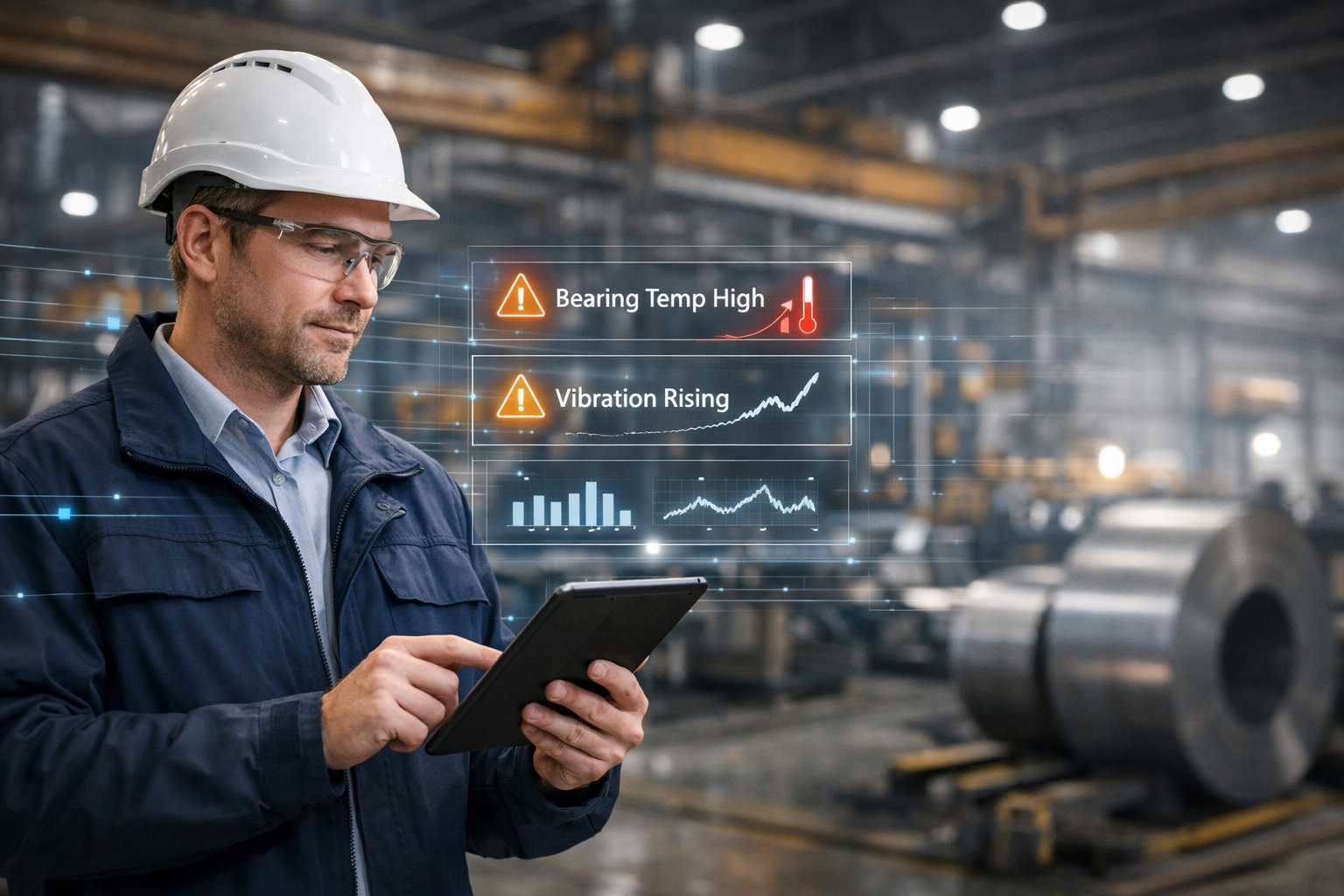
Steel plants run on critical assets. Wire drawing lines, stranding machines, patenting furnaces, annealing lines, cranes and handling systems all have one thing in common. When they stop unexpectedly, the entire production schedule suffers.
Many plants like the idea of AI based maintenance, but assume it needs a big budget, complex sensors and a separate data science team. The reality is different. You can start small, use the data you already have and move step by step toward intelligent maintenance alerts.
This article explains how steel rod, wire, strand, LRPC, wire rope and sling manufacturers can begin their AI maintenance journey in a practical way, without a huge upfront investment.
For more steel focused digital ideas, you can explore SteelExperts.in.
Why AI Based Maintenance Matters for Steel Plants
Maintenance is not just about breakdowns. It is about availability, quality and safety.
When a critical machine fails at the wrong time:
- Delivery commitments slip
- WIP piles up in front of the bottleneck
- Quality can suffer due to unstable settings after restart
- Overtime and emergency repair costs increase
AI based maintenance alerts help maintenance and production teams move from reactive firefighting to planned intervention. You do not need a futuristic setup to begin. You need data discipline and a clear starting point.
Step 1: Use the Data You Already Have
Start with simple time and event data
Most steel plants already capture basic information such as:
- Breakdown logs
- Downtime reasons
- Production quantities by shift
- Major component replacement dates
Even if these records are in Excel or simple registers, they are a good starting point. You can convert them into structured digital data and begin to see patterns.
When your plant uses a steel focused ERP like SteelExperts, this information can be stored and analyzed in one place. To see how maintenance, production and planning can sit inside one system, you can review SteelExperts ERP Modules.
Step 2: Define Practical Alert Conditions
Move from calendar based to condition based logic
Traditional preventive maintenance is often calendar based or hour based. AI based thinking adds more nuance, even before you bring in machine learning.
Some simple conditions you can start with:
- Frequency of similar breakdowns in a rolling 30 day period
- Downtime per week for a specific machine crossing a threshold
- Unusual jump in minor stoppages that point to a bigger problem
- Number of interventions on a particular component in a quarter
These rules can be implemented inside your ERP or maintenance system and used to generate early warning alerts. No advanced sensors are required at this stage, only well structured data and smart thresholds.
Step 3: Connect Production, Quality and Maintenance
Look at the whole picture, not just failures
AI based maintenance becomes powerful when you relate breakdowns to other variables, such as:
- Production speed and loading levels
- Product type or grade mix
- Quality issues like surface defects or wire breaks
- Operators or shifts with repeated trouble patterns
For example, you might discover that a particular drawing machine fails more often when running a certain size range at higher speeds. This is already an AI style insight, driven by data and correlation.
A steel specific ERP can help you capture production, quality and maintenance data in one place so that such links are easier to see. You can read more about integrated planning and production thinking in the blog ERP Implementation Plan for Steel Plants: 30 60 90 Day Roadmap.
Step 4: Introduce Simple Machine Signals Where It Really Matters
Focus on critical lines, not every motor in the plant
You do not need sensors on every asset to claim AI based maintenance. Start with one or two critical machines that cause major disruption when they stop. For example:
- Main wire drawing line for a key diameter range
- Stranding machine used for export grade strand
- Closing machine for high performance wire ropes
For these assets, you can introduce simple signals such as:
- Motor current patterns
- Basic vibration readings
- Temperature trends at bearings or gearboxes
Even low cost sensors with periodic readings can feed into a trend graph. When combined with your breakdown history, this information becomes a basic AI input source.
Step 5: Build Alert Rules and Dashboards
Keep the first version simple and transparent
Once you have data and basic signals, you can create maintenance alerts such as:
- "Drawing line 3 has crossed typical vibration range for the last seven days"
- "Stranding machine A has faced three minor stoppages per shift for the last five shifts"
- "Gearbox temperature on closing machine B has remained above normal for four consecutive hours"
These alerts can be sent as:
- Email notifications
- On screen messages inside your ERP or dashboard
- Maintenance planner worklists
The important part is that alerts are:
- Easy to understand
- Linked to real data
- Actionable by your maintenance team
If your ERP already centralizes maintenance and production information, the alert logic can live inside the same system, reducing the need for extra tools.
Step 6: Move Gradually Toward Machine Learning
Use patterns and models after building trust in the basics
Once your team is comfortable with rule based alerts, you can consider machine learning models that predict failures based on:
- Historical breakdown patterns
- Sensor signals
- Product mix and speed combinations
- Ambient conditions if relevant
At this stage, you may work with a technology partner or use cloud based AI services that do not require a large local infrastructure. Many plants prefer to first stabilize their ERP and data discipline, then move into advanced AI.
If your long term digital road map includes export growth, you may find it useful to align your maintenance data with export readiness thinking. The article Export Readiness Checklist for Wire and Rope Manufacturers explains how traceability and reliability influence export confidence.
External Reference for AI in Industry
For general reading on AI adoption trends in manufacturing, strategy papers from organizations like McKinsey provide useful overviews and case study ideas: McKinsey on Operations and AI. You can use such material to educate management on why a step by step, value focused AI journey makes more sense than a one time big investment.
Frequently Asked Questions
Do we need expensive sensors to start AI based maintenance
No. You can begin with structured breakdown logs, downtime records and basic production data. Simple rule based alerts built on this foundation already bring benefits and prepare the ground for richer AI models later.
How important is an ERP system for AI maintenance
An ERP or central system is very helpful, because it connects maintenance data with production, planning and quality. Without that backbone, it becomes hard to relate breakdowns to product mix, loading and process history.
Which machines should we prioritize for AI based alerts
Start with bottleneck machines where unplanned stops create major impact. For most wire and rope plants, this usually means key drawing, stranding and closing lines, or critical furnaces linked to multiple downstream operations.
Can small and mid sized steel plants realistically use AI
Yes. The key is to avoid large, complex projects and instead focus on small, targeted use cases that show clear value. Structured data, simple alerts and gradual improvements are more effective than a one time expensive deployment.
How does SteelExperts ERP support maintenance and AI readiness
SteelExperts ERP is built for steel rod, wire, strand, LRPC, wire rope and sling environments. It helps capture production, quality and maintenance events in one place, which is essential for AI readiness. You can explore the modules here: SteelExperts ERP Modules.
Conclusion
AI based maintenance alerts do not have to start with a big transformation project. Steel plants can begin with the information they already have, define simple and practical alert rules, then gradually introduce machine signals and learning models.
By focusing on critical machines, clean data and clear alerts, maintenance teams can reduce surprises, improve availability and protect both quality and commitments.
For more ideas on steel specific digital transformation and ERP thinking, you can explore SteelExperts.in.