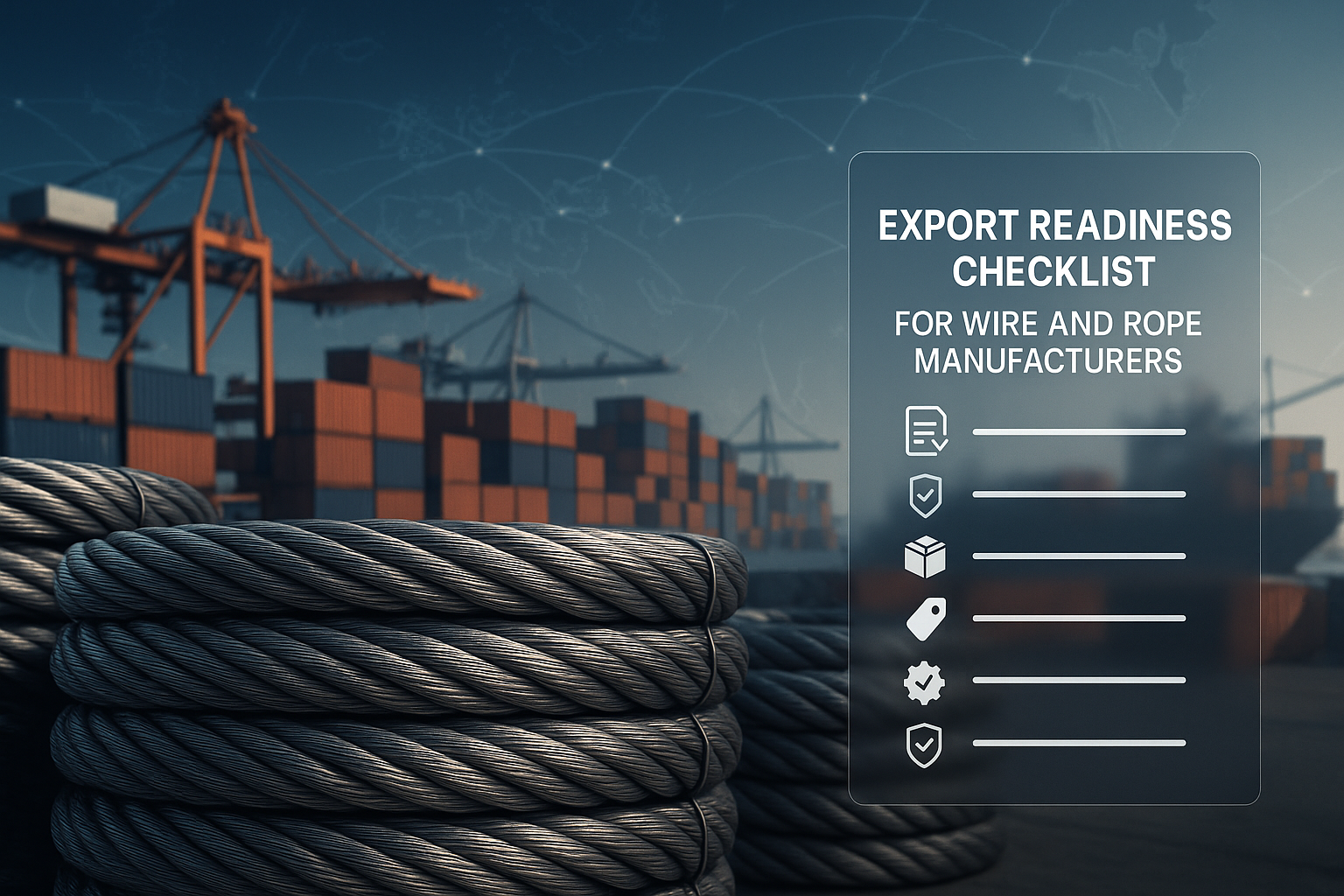
Exporting steel wire, strands, LRPC, wire ropes, and slings can be a strong growth engine, but only when the factory is truly prepared for the expectations of international buyers. Many manufacturers assume export readiness is just about documentation and freight partners. In reality, export success depends on consistent quality, traceability, stable planning, and the ability to respond quickly to audits, complaints, and repeat orders.
This checklist is written for wire and rope manufacturers who want to build a reliable export pipeline and reduce rejection risk. You can use it as an internal audit guide before approaching new markets.
If you are building a long term transformation roadmap, explore industry focused resources at SteelExperts.in.
Why Export Buyers Expect Higher Operational Maturity
Domestic orders often allow flexibility in lead times and documentation styles. Export buyers usually do not. They expect clear proof of quality systems, consistent mechanical performance, stable product specifications, and traceability from heat to finished goods.
Export readiness in wire and rope manufacturing means you can consistently deliver:
- Correct specification match
- Repeatable performance across batches
- Clean documentation with minimal back and forth
- Fast root cause analysis when issues arise
- Predictable delivery timelines
This entire system becomes easier when your plant operates with structured digital workflows instead of scattered spreadsheets.
Export Readiness Checklist
1. Product and Specification Control
Before accepting export enquiries, verify that you have a disciplined method to manage product variants.
You should be able to maintain:
- Clear product master data
- Diameter, construction, and grade control
- Standard tolerances and test requirements
- Approved process routes for each product family
- Revision history for specifications
For plants managing multiple categories like steel wire, strand, LRPC, wire rope, and slings, specification discipline is often the first export differentiator.
2. Heat, Coil, and Reel Traceability
Export buyers may ask for full traceability, especially for load bearing applications.
Make sure you can link:
- Heat number
- Incoming coil
- Process batch at each stage
- WIP reel movement
- Final product batch
- Test results and certificates
If you cannot produce this chain quickly, you might still be exporting, but you will remain vulnerable during audits or customer complaints.
3. Multi Stage Process Visibility
Wire and rope manufacturing involves many sequential operations. Export consistency depends on controlling each step.
Your internal system should track:
- Multi pass drawing outputs
- Patenting and heat treatment details where relevant
- Stranding and closing batch history
- Rework records
- Machine and shift wise performance patterns
A stable process history adds confidence for both buyers and your own team.
4. Quality Control with Export Friendly Records
Export quality is not only about testing. It is about evidence.
Ensure you have structured QC for:
- Raw material inspection
- In process checks
- Final inspection and acceptance
- Calibration records for testing equipment
- Standardized test formats for mechanical properties
Your QA team should be able to retrieve results without manual searching or file confusion.
5. Certificate Readiness
Many export buyers require documentation before shipment approval.
You should be able to generate:
- Test certificates
- Inspection sheets
- Compliance documents based on buyer requirements
- Packing and batch identification documents
This is where many plants lose time, especially when records are stored in different places across departments.
6. Packaging, Labeling, and Dispatch Discipline
Packaging is not a small operational detail in exports. It connects quality protection, brand image, and compliance.
Confirm your readiness for:
- Coil and reel labeling standards
- Export grade packing methods
- Batch marking consistency
- Barcode or QR support if buyers expect it
- Pallet and container loading SOPs
Even a high quality product can fail buyer acceptance due to weak packaging discipline.
7. Inventory Control and WIP Accuracy
Export planning relies on realistic commitments. A plant that cannot see exact WIP and finished goods availability cannot commit confidently.
A strong export ready system provides:
- Real time raw material, WIP, and finished goods visibility
- Bin and location controls
- FIFO and heat based allocation logic where required
- Reserved stock for export orders
Accurate inventory makes delivery promises reliable.
8. Production Planning for Export Timelines
Export orders often have strict delivery slots.
Your planning should support:
- Monthly and weekly delivery alignment
- Capacity planning across drawing, stranding, and closing
- Bottleneck identification
- Clear job card logic and scheduling
If planning remains manual, export growth may increase chaos rather than profit.
9. Costing and Margin Clarity
Export orders may look attractive on paper but can become low margin due to hidden costs.
Before confirming pricing, ensure you can track:
- Material consumption accuracy
- Rework cost impact
- Packing and logistics costs
- Energy and machine load impact
- Product wise margin visibility
This prevents underpricing and helps you negotiate with confidence.
10. Digital Process Backbone
This final point is the foundation that ties every other checklist item together.
Many wire and rope manufacturers struggle with export scale because they do not have a steel specific ERP that supports real manufacturing logic.
If you want to see how steel focused planning, quality, inventory, and traceability modules are structured, visit:
To understand the long term vision for the steel manufacturing sector, you can also explore:
For a broader view of the platform and related insights, start from the home page:
Practical Pre Export Self Audit Questions
Before pitching to new export buyers, ask your internal team:
- Can we produce heat to finished traceability within minutes
- Can we generate buyer specific certificates without manual compilation
- Do we have stable process routes for each product type
- Are our packaging and labeling export ready
- Can we commit delivery dates based on real capacity and WIP
If most answers feel uncertain, you are not far from readiness, but you need stronger process control.
Frequently Asked Questions
What is the biggest export risk for wire and rope manufacturers
Inconsistent quality evidence and weak traceability. Even if your product is good, missing documentation and process history can create trust issues with international buyers.
Do small manufacturers need an ERP before exporting
You do not need a large system on day one, but you do need structured and consistent data control. A steel specific ERP helps reduce manual work and improves audit readiness.
Why do export buyers ask for heat, coil, and batch history
Because wire ropes, strands, and slings are critical safety products in many applications. Buyers want confidence that the product performance is consistent and verifiable.
How can we shorten documentation turnaround time
Standardize test formats, maintain digital records linked with batches, and ensure your team can generate certificates directly from production and quality data.
How does SteelExperts ERP support export readiness
It is designed for steel rod, wire, strand, LRPC, wire rope, and sling workflows with structured planning, WIP control, traceability, and quality documentation. You can explore the module coverage here: SteelExperts ERP Modules.
Conclusion
Export readiness for wire and rope manufacturers is not a single department responsibility. It is the combination of disciplined production routing, traceability, quality evidence, packaging standards, reliable planning, and fast documentation.
When these elements are connected through structured digital workflows, export growth becomes sustainable and scalable instead of risky.
For more industry focused guidance and steel manufacturing ERP insights, visit: